Strategic Holiday Home Staging: The Definitive Seller's Playbook for the Charleston Winter Market

Homeowners often hesitate to sell a residential property in the Lowcountry between late autumn and winter. A persistent misconception suggests that Charleston real estate enters hibernation between Thanksgiving and the New Year, prompting many sellers across Mount Pleasant, West Ashley, James Island, and Downtown Charleston to wait for the spring azalea bloom. Market transaction trends tell a distinctly different story: late fall and winter represent a highly lucrative, strategic window. During these months, active inventory across the Charleston Trident Multiple Listing Service (CTMLS) typically tightens, filtering out casual weekend open-house browsers and leaving a concentrated pool of serious, deadline-driven purchasers.
Capitalizing on Charleston’s winter market requires a disciplined, locally attuned staging strategy. While the Lowcountry avoids heavy blizzards, cooler coastal temperatures, shorter daylight hours after daylight saving time, dormant live oak and palmetto landscaping, and occasional coastal dampness demand intentional preparation. By balancing Lowcountry warmth with spatial neutrality, sellers can highlight architectural assets—from deep piazzas and heart-pine floors to marsh views—to accelerate contract velocity and protect net equity.
1. The Charleston Winter Market Opportunity: High-Intent Buyers and Staging ROI
Listing a home during the holiday season offers structural advantages that disappear during peak spring and summer surges. When regional inventory contracts, well-presented homes face reduced competition on CTMLS and national portals, capturing undivided attention from active buyers.
Shoppers touring Charleston properties in November, December, and January are rarely browsing casually. Local real estate specialists observe that winter buyers are generally driven by firm timelines and major life transitions, including:
Corporate and Medical Relocations: Executives and healthcare specialists transferring into Charleston’s growing aerospace, tech, port, and medical corridors (such as MUSC and Roper St. Francis) ahead of Q1 start dates.
Military Reassignments: Service members and families executing strict Permanent Change of Station (PCS) orders tied to Joint Base Charleston.
Academic Transfers: Faculty and administrators relocating between semesters for the College of Charleston, The Citadel, or Charleston Southern University.
Tax-Driven and Second-Home Investors: Purchasers from the Northeast and Midwest seeking to finalize year-end acquisitions or establish a warm-weather Lowcountry residence before January.
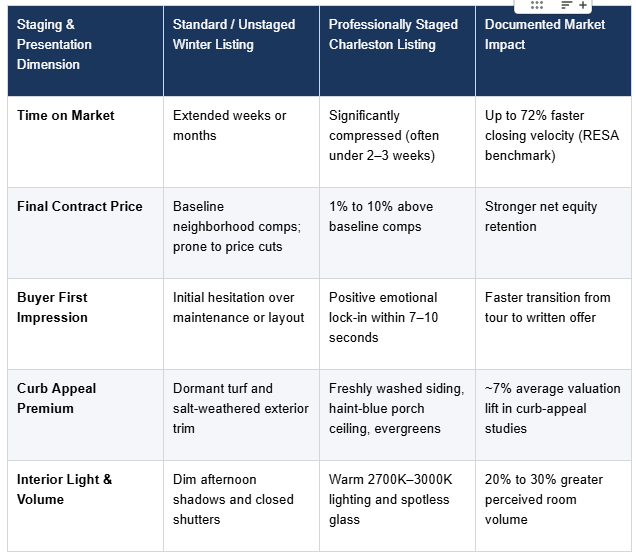
National staging benchmarks consistently demonstrate measurable financial returns. Industry surveys compiled by the Real Estate Staging Association (RESA) and the National Association of Realtors (NAR) indicate that professionally staged homes sell substantially faster than unstaged properties and frequently command contract premiums of roughly 1% to 10% above baseline expectations, depending on neighborhood price tier and inventory conditions.
To capture this motivated buyer pool, pricing discipline from day one is essential. Local listing agents recommend anchoring the asking price to current neighborhood comparables rather than testing an aspirational ceiling that leads to stale days on market and January price reductions.
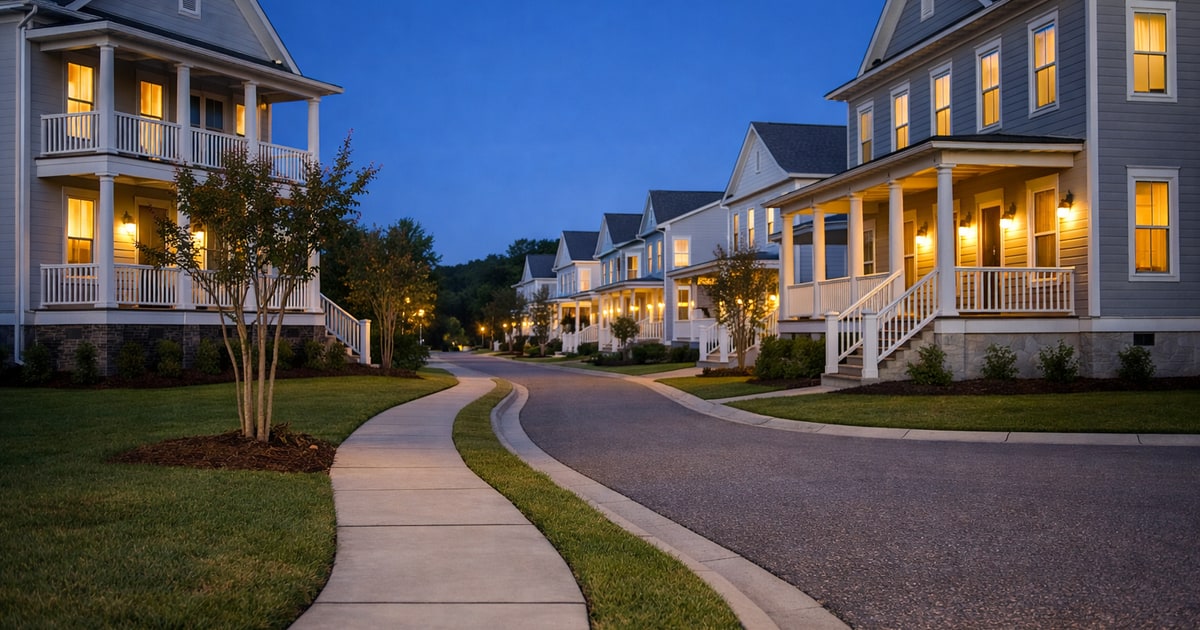
2. Lowcountry Exterior Architecture & Curb Appeal: The Ten-Second Impression
Consumer housing studies show that buyers form a lasting judgment within the first 7 to 10 seconds of arriving at a property. In Charleston, winter brings thinner tree canopies across crepe myrtles and deciduous oaks, exposing rooflines, HardiePlank or wood siding, brick foundations, and porch trim to direct scrutiny. Meanwhile, coastal humidity and salt air leave subtle mildew trails on north-facing facades and tabby walkways.
Before adding a single wreath, sellers must address core exterior maintenance. Soft-wash siding and brick walkways, clear pine needles and oak leaves from gutters and standing-seam metal roofs, sweep the front piazza, and touch up exterior trim and front entry doors. Property valuation studies indicate that homes with standout curb appeal command roughly a 7% average price advantage over comparable homes with deferred exterior upkeep—a meaningful difference at Charleston median home prices.
Lowcountry Seasonal Curb Appeal Standards
Architectural Lighting Over Novelty Displays: Store inflatable lawn characters, blinking multicolored bulbs, and heavy tinsel. Outline classic Charleston architectural features—such as piazza columns, gas lanterns, dormer peaks, or a mature live oak—with warm-white, continuous string lights.
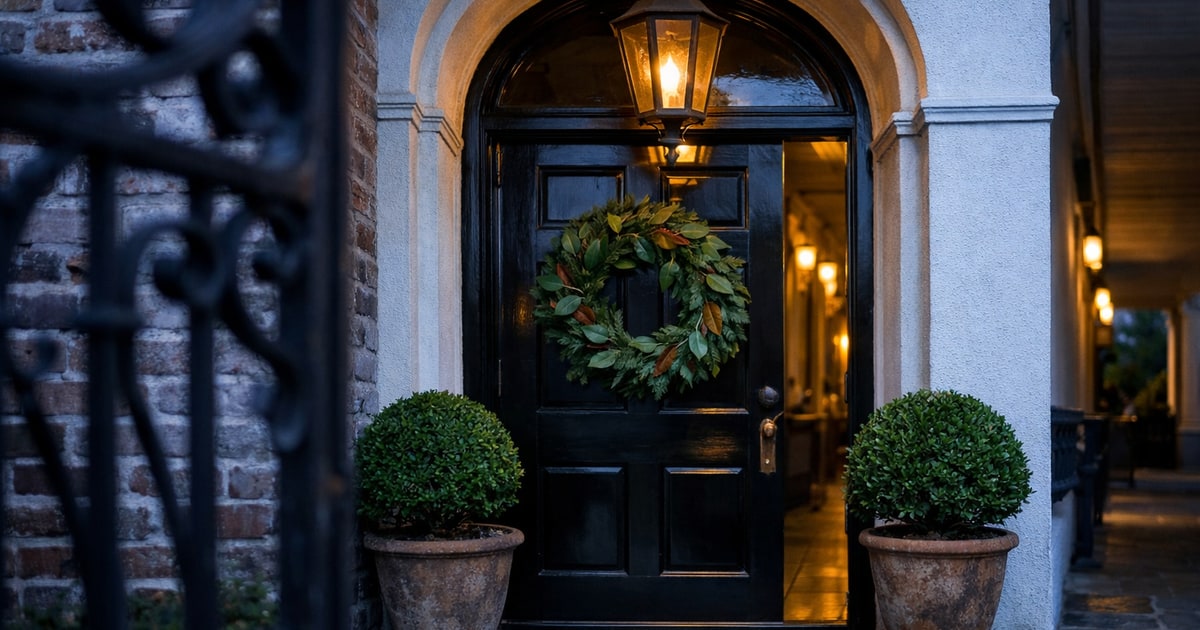
Coastal Evergreen Thresholds: Dress the front entry with understated Lowcountry elegance. Hang a fresh magnolia leaf, cedar, or boxwood wreath on the front door, lay a crisp natural coir doormat, and flank the steps with matching ceramic or cast-stone planters filled with winter-hardy greenery, rosemary topiaries, or white cyclamen.
Muted Late-Autumn Accents: For November and Thanksgiving showings, skip bright orange novelty pumpkins. Arrange two or three heirloom white, sage green, or soft buff pumpkins beside the piazza steps for a refined coastal palette.
Piazza & Outdoor Living Staging: Unlike northern markets buried in snow, Charleston buyers expect year-round outdoor living. Stage the front piazza or screened porch with clean wicker or teak seating, weather-resistant neutral cushions, and folded plaid or woven throws so buyers can envision morning coffee or oyster roasts even in December.
The Four-Season Garden Look-Book: Because Bermuda and St. Augustine lawns go dormant in winter, place a bound, high-resolution photo book on the foyer console showcasing the yard, pool, marsh views, and blooming azaleas or camellias in spring and summer.
3. Atmospheric Optimization: Light, Climate Control, and Sensory Discipline
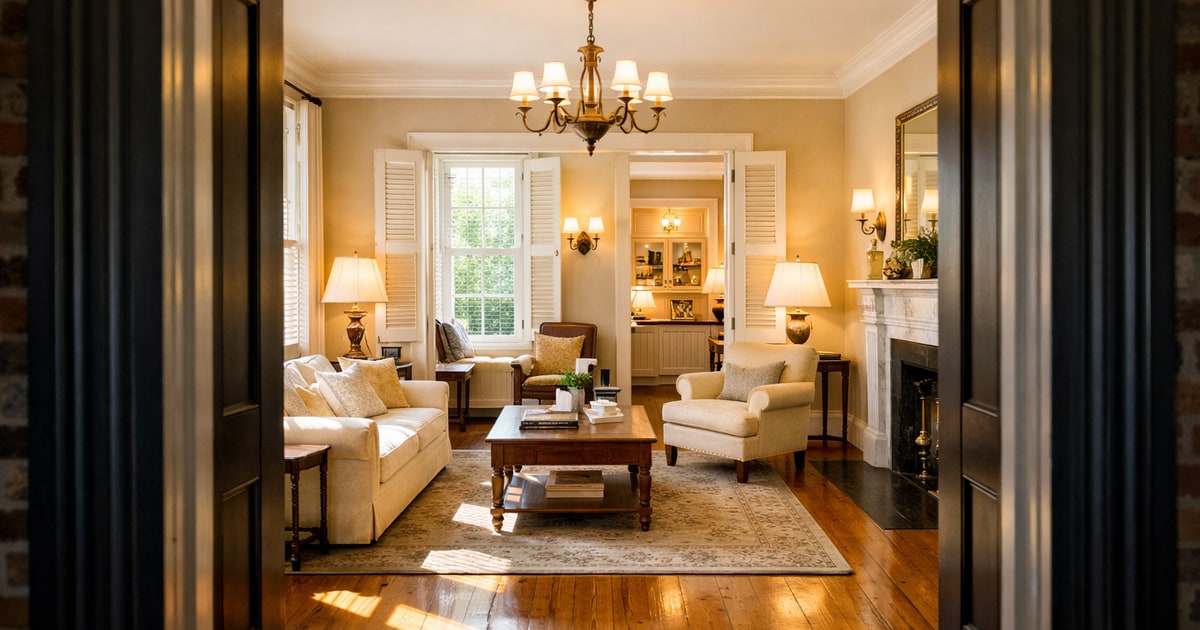
After daylight saving time ends in November, late-afternoon showings across the Peninsula, Daniel Island, and Mount Pleasant frequently take place at dusk or after dark. Dimly lit interiors feel cramped and somber, whereas well-illuminated rooms appear 20% to 30% more spacious. Furthermore, coastal salt film and pollen residue on windowpanes can block up to 40% of available winter daylight.
Illumination & Glass Protocol
Interior and Exterior Window Washing: Clean all window glass, transoms, and French doors inside and out. Open plantation shutters and draw drapes completely back for daytime showings to frame marsh, garden, or streetscape views.
Full-Home Lighting Activation: Turn on every light fixture prior to a tour—overhead chandeliers, recessed cans, art sconces, under-cabinet strips, and bedside lamps.
Bulb Temperature Consistency: Standardize main living spaces, dining rooms, and bedrooms with warm-white LEDs (2700K to 3000K) to complement warm heart-pine floors and historic woodwork, while using crisp, high-lumen daylight bulbs in baths and laundry rooms.
Pathway & Lantern Safety: Ensure porch gas lanterns, landscape uplights, and driveway path lights are illuminated for twilight showings so buyers and agents can safely navigate brick walkways and locate lockboxes.
Mechanical Readiness, Hearth Focal Points, and Scent Control
HVAC & Crawlspace Inspection Readiness: Service heat pumps and furnaces before listing, install fresh air filters, and ensure dehumidifiers or encapsulated crawlspaces are clean and dry—key inspection items for Charleston buyers. Seal any air leaks around historic wood windows or French doors.
Thermal Comfort & Fireplace Staging: Set thermostats to a welcoming 69°F–71°F before showings so buyers take off their coats and linger. Clean out fireplace fireboxes, dress the mantel with fresh magnolia garland and brass candlesticks, and light a clean gas or wood fire during staffed open houses.
Clean Air & Natural Lowcountry Aromas: Air out the home for 15 to 30 minutes before tours to clear cooking odors from seafood, frying oil, or heavy spices. Avoid synthetic air fresheners; instead, simmer water with sliced orange peel, cinnamon sticks, and whole cloves on the range, or use understated soy candles in cedarwood, vanilla, or sea salt notes.
4. Interior Staging Protocols: Balancing Holiday Warmth with Broad Appeal
Effective staging allows buyers to mentally move their own furniture and traditions into the home. Overly dense holiday decor disrupts this process by turning spacious living areas into a display of the seller’s personal memorabilia. The guiding principle is simple: seasonal styling must highlight the home’s architecture—crown molding, wainscoting, tabby hearths, and built-ins—never hide it.
A Coastal Neutral Holiday Palette
Base Textiles: Crisp oyster whites, warm cream, sand, linen taupe, and soft oatmeal throws or pillows.
Organic Lowcountry Greenery: Fresh magnolia leaves, seeded eucalyptus, Fraser fir sprigs, coastal cedar, and natural pinecones.
Refined Metallics: Unlacquered or brushed brass, warm gold, antique copper, and glass accents that bounce warm evening light.
Tree Proportions, Multi-Holiday Elegance, and Clutter Rules
Scale the Tree to the Room: In standard 8- or 9-foot rooms, use a slender pencil tree to keep floor space and traffic flow open. In 10- to 12-foot historic Charleston parlors or two-story great rooms, choose a tall, narrow profile that celebrates ceiling height without blocking windows or fireplace mantels. Pack away personal family photo ornaments and children’s crafts in favor of cohesive matte gold, glass, and warm-white ornaments.
Inclusive, Sculptural Seasonal Pieces: Favor universally appealing winter textures—greenery, candlelight, woven baskets, and glass hurricanes. For sellers celebrating Hanukkah, display a sleek marble, brushed brass, or wrought-iron menorah on a sideboard alongside understated walnut or brass dreidels rather than plastic novelty pieces.
Zero Wrapped Packages on Display: Never stack wrapped gifts beneath the tree during active market showings. Piles of boxes shrink perceived floor space, signal tight closet storage, create security risks during open houses, and remind buyers they are intruding on another household.
5. The Emotional Centerpiece: Staging the Charleston Dining Room
Hospitality sits at the heart of Charleston living, making the dining room an emotional anchor during holiday tours. Buyers naturally picture hosting Thanksgiving dinner, holiday oyster suppers, or New Year’s Eve gatherings here. An empty table feels cold, while an elaborate multi-course banquet setup looks cluttered and blocks sightlines across classic Charleston single-house floor plans.
Showcase the Tabletop: Leave the edges of mahogany, heart-pine, or stone tables exposed to highlight craftsmanship.
Neutral Linen Runner: Lay a crisp cream, oatmeal, or pale gray linen runner down the center.
Restrained Place Settings: Set classic white or ivory porcelain dinner plates over woven seagrass or brushed brass chargers, paired with clear crystal glassware.
Low-Profile Centerpiece: Keep floral or botanical arrangements low—such as a wooden dough bowl or low ceramic vessel filled with magnolia leaves, white heirloom pumpkins, or fresh pears—so sightlines stay open from adjacent rooms.
Soft Candlelight: Add two or three ivory taper candles in brass holders for subtle warmth. If you host a family dinner while listing, photograph the staged setup beforehand so you can reset it identically right after the meal.
6. Digital Marketing, Photography Timing, and Pre-Listing Cadence
Because many of Charleston’s winter buyers relocate from out of state, digital presentation across CTMLS, Zillow, and CharlestonHome.com drives initial showing requests. One of the costliest mistakes a seller can make is hiring a photographer after putting up holiday decorations.
The Evergreen Photo Rule: Listing photos featuring Christmas trees, stockings, or wreaths immediately timestamp a property as stale once January arrives, inviting discounted offers from February buyers who assume the home has lingered unsold.
Capture Core Photos Pre-Decor: Complete architectural photography, twilight exterior shots, drone marsh/neighborhood imagery, and Matterport 3D scans before unpacking holiday decor.
Add Seasonal Shots at the End (Optional): If desired, append one or two tasteful holiday living room or dining photos at the end of the gallery as supplemental lifestyle frames that can be removed effortlessly on January 2.
Invest in 3D Virtual Tours: Detailed video walkthroughs enable relocating corporate and military buyers to evaluate room flow remotely before flying into Charleston International Airport for a weekend tour.
Confirm Holiday Agent Coverage: Ensure your listing agent has full showing and negotiation coverage across Thanksgiving, Christmas, and New Year’s weekends, when out-of-town buyers often schedule quick scouting trips.
Two-Week Pre-Listing Execution Schedule
Two Weeks Out: Declutter closets, attics, and garage spaces; touch up scuff marks on baseboards and piazza railings; schedule HVAC servicing and deep cleaning; gather coastal neutral staging accents.
One Week Out: Wash all windows and French doors; swap bulbs to warm-white 2700K–3000K LEDs; capture clean, pre-decor professional listing photos and 3D virtual tours; assemble the four-season garden look-book.
Day Before Showings: Polish hardwood floors and vacuum rugs; style the dining tablescape and subtle evergreen mantel accents; pack a showing-day touch-up bin; confirm Supra lockbox and showing instructions.
Showing Day Protocol: Open all plantation shutters and blinds; switch on every interior lamp and porch lantern; air out the home for 20 minutes; simmer citrus and spice water; set thermostat to 70°F; light the fireplace for staffed open houses.
7. Master Charleston Holiday Staging Matrix
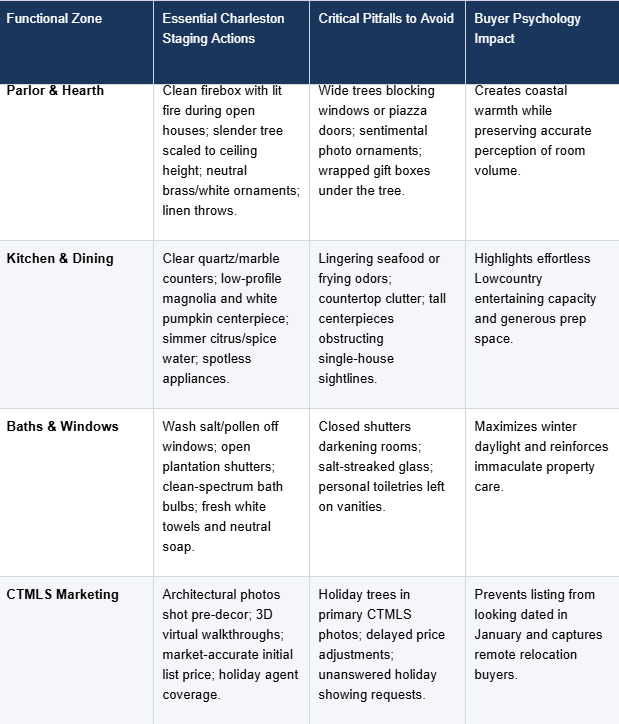
By pairing disciplined coastal preparation with architectural restraint, Charleston sellers can turn the quietest months on the calendar into a competitive advantage—attracting qualified winter buyers and securing a smooth, high-value closing before the spring rush begins.